
Found Before I Knew I Needed to Be Found: Tiana's Perspective on Opportunity
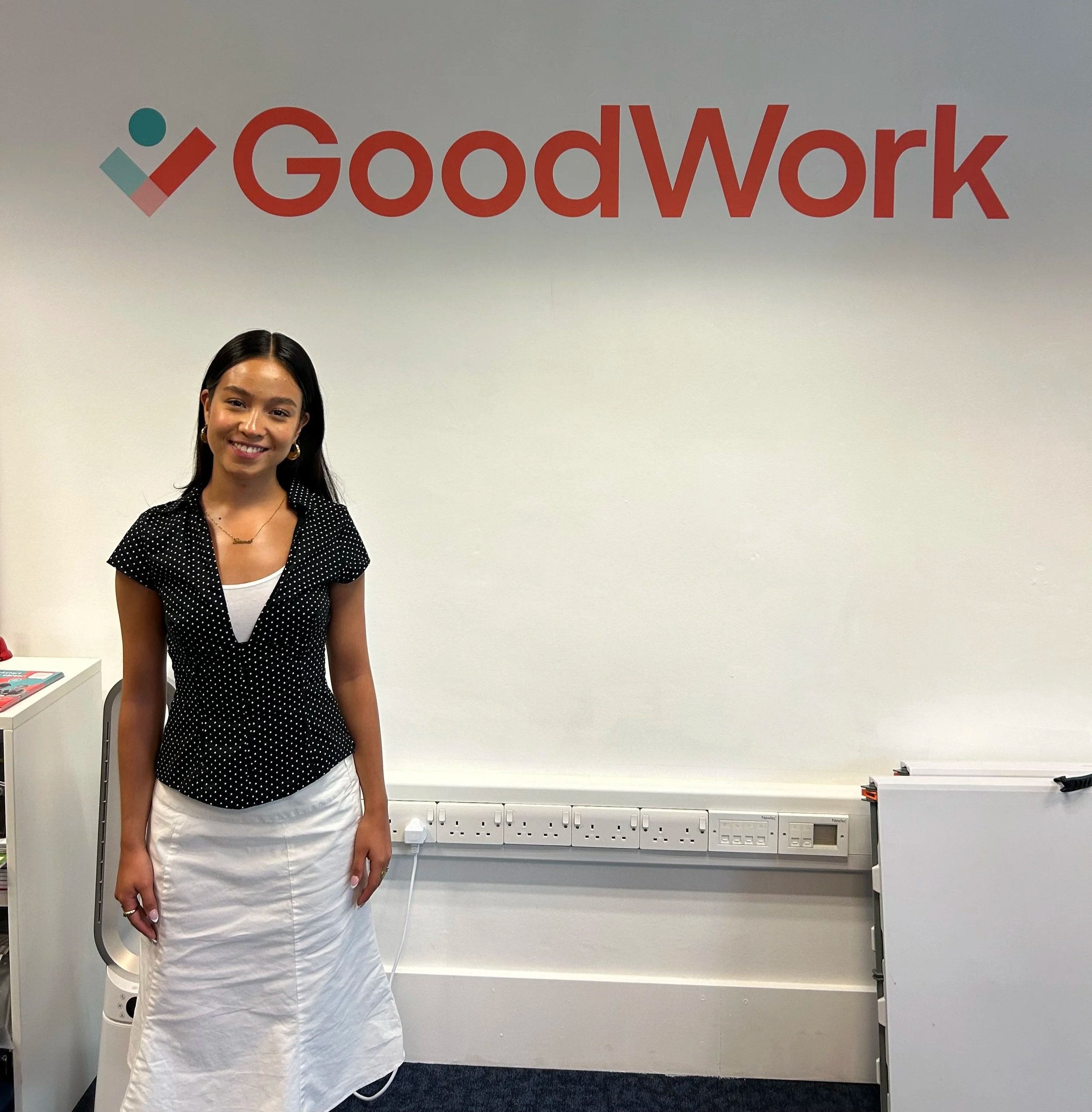
By Tiana, Research and Policy Intern at GoodWork and Undergraduate Student at LSE
Two weeks into being an LSE fresher, a classmate asked me: "Are you applying to spring weeks?" I had no idea what they meant. Applying? For what? What's a spring week? Baffled, I googled it the second I got home. Turns out, a spring week is a short work placement for first-year students, and if you do well, it can fast-track you to an internship offer. This was new terminology for me, and it made me feel behind before I'd even started, denting the pride I'd felt just for getting through the door. To mask my confusion, I smiled and nodded, not wanting to seem two steps behind everyone else. This knowledge gap is a divide I hadn't recognised, or lived, until now.
I grew up in the seaside town of Christchurch, Dorset, and went to a state school where Oxbridge was never discussed and LSE wasn't known. There's a common misconception that regional inequality is a binary North-South divide. But only 58% of young people in the South West progress to higher education or training, the lowest rate of any English region, a stark contrast to over 75% in London.

For me, that meant I only discovered LSE existed when my Economics teacher mentioned a widening participation programme they were piloting. Fortunately, that programme gave me the leg up my school couldn't, and something just as valuable: a network of people who shared my ambition and understood my barriers.
My own barrier was caring for my family members through their mental health difficulties, not realising until seventeen that this was a recognised role with support attached. There was no education at school about being a young carer, especially when it came to mental health. When you think of a young carer, you think of physical labour: washing, cooking, feeding, but perhaps not the mental toll of being someone's emotional support.
Caring for someone doesn't just take time; it takes the headspace you need to work out who you want to be, which I am still figuring out now. That may be part of why young carers are more than twice as likely to be persistently out of work or education as their peers. Only 26% believe they'll ever have the same opportunities as everyone else, and three in four say caring makes it hard to take part in education or training at all.
Getting into LSE felt like the finish line, but it took a term to learn it wasn't. I was suddenly surrounded by privately educated peers who either had family connections to fall back on for internships or prior knowledge of spring weeks, with their application spreadsheets already open. I couldn't help but compare myself to peers with 500+ LinkedIn connections and stacked CVs; imposter syndrome crept in. I now realise that my classmates weren't necessarily smarter than me, they'd just been told things I hadn't, and handed opportunities they didn't have to fight for.
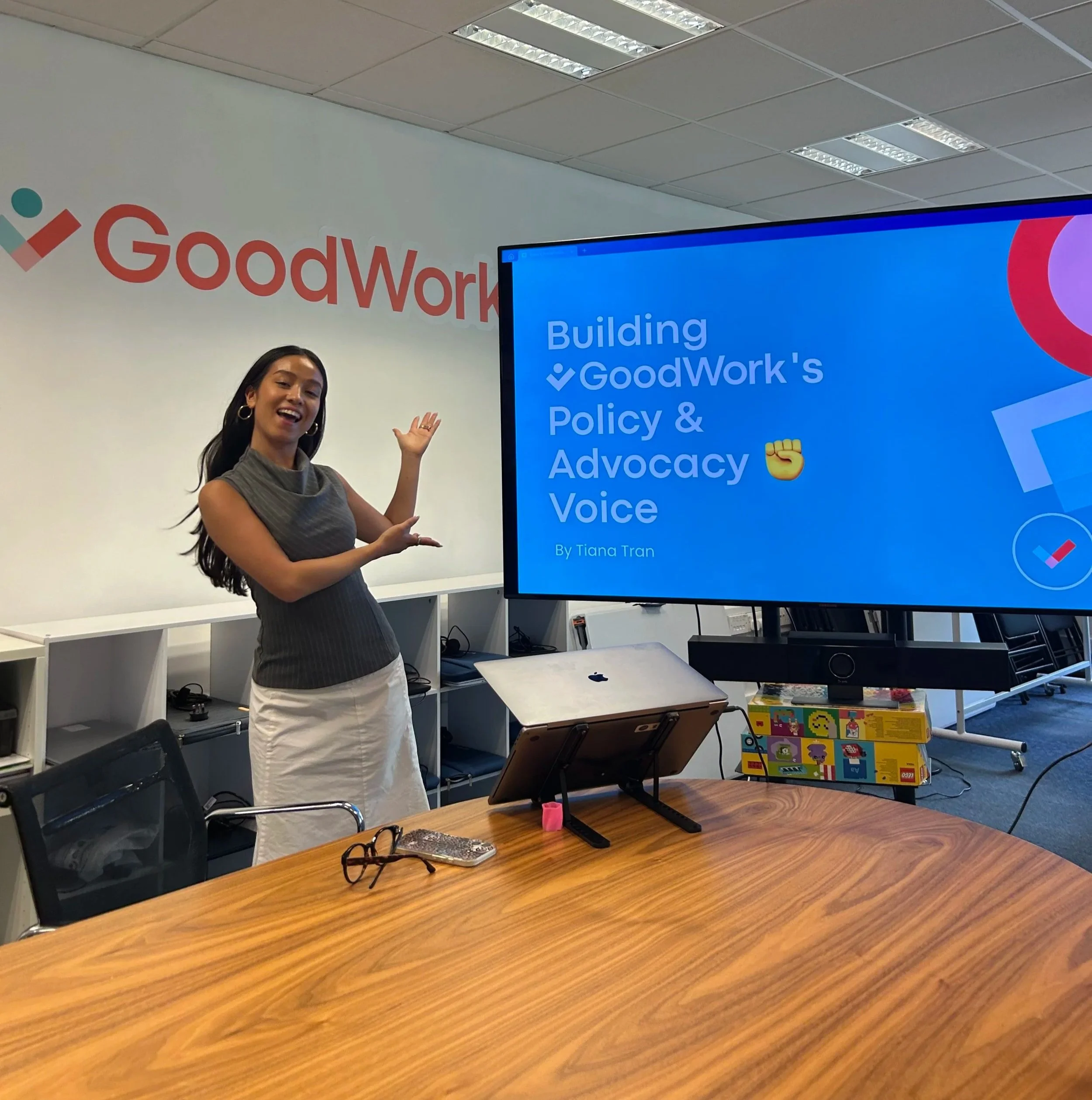
I'm currently a Policy and Research Intern at GoodWork, an internship funded through LSE's Mitchell Family Internship Programme for first-year students from underrepresented backgrounds, paid at London Living Wage. Through this, I've built my network and skill set, and have grown confidence working in a sector I care about, whilst also providing a young person's perspective on how to grow their policy and advocacy function. It's given me the internship experience my peers and future employers assume I already have, and is proof that the gap closes when someone deliberately builds the bridge.
GoodWork's employability programmes do the same for young people from lower socioeconomic backgrounds more widely. Many of the young people GoodWork supports never come near a university, let alone a spring week. But they hit the same wall, such as an apprenticeship wage that only works if someone at home can cover living costs. Schemes like the one that's given me my start shouldn't be the exception. It was encouraging to see Labour's 2024 manifesto pledge to ban unpaid internships, but disappointing to see the government retreat from it. Rather than banning unpaid internships outright, its response to the call for evidence stopped short, relying instead on existing wage rules and a new watchdog, the Fair Work Agency, expected to make interns one of its first priorities. It's Lucy Powell, now Secretary of State for Education, who inherits that half-finished promise, and I want to see her follow this through.
But government can only set the floor on what people are paid; it's employers who decide who actually gets through the door, and at what salary. So my plea to employers is this: build more schemes that pay at least the Living Wage, and recruit from lower socioeconomic backgrounds, so opportunity depends on potential rather than privilege, networks, or who's already had the chance to build experience.
Thank you to GoodWork, and to LSE's Springboard and Mitchell Family Internship programmes, for finding me before I even knew I needed to be found.